
In the modern enterprise, data is the most valuable asset, yet it often carries a heavy "complexity tax." As businesses strive to become truly data-driven—a shift that McKinsey research indicates helps organizations outperform competitors by 20%—they frequently encounter the wall of data silos and disconnected infrastructure. These silos do more than slow down operations; they create organizational stress and technical debt.
NetApp addresses this challenge not merely through hardware, but through intelligent data infrastructure powered by its flagship operating system, ONTAP. Currently managing over 100 exabytes of data globally, ONTAP provides the calm confidence that comes from knowing your data is accessible, efficient, and protected, regardless of its location.
1. The "Write Anywhere" Magic: Understanding WAFL
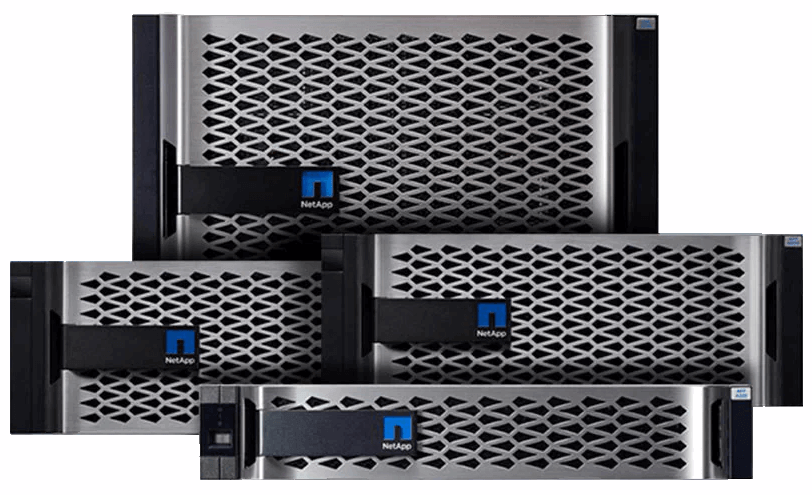
At the heart of NetApp's architectural superiority is WAFL (Write Anywhere File Layout). While traditional file systems are often limited by rigid, pre-defined block mapping that forces data into specific physical locations, WAFL treats the underlying storage like a blank canvas.
This design is highly counter-intuitive but technically brilliant: by writing to any available location, WAFL effectively turns what would be slow, random writes in a traditional system into high-speed sequential disk I/O. This optimization reduces disk contention and dramatically improves the efficiency of point-in-time snapshots.
WAFL is unique in its ability to handle large amounts of data efficiently. One of the main advantages of WAFL is its snapshot capability, which allows for consistent point-in-time copies of the file system. Its design optimizes write and read operations, reduces disk I/O, and integrates seamlessly with NetApp's RAID-DP (Double Parity) for data protection.
2. Physical Power vs. Logical Agility: From FlexVols to FlexGroups
To manage storage effectively, ONTAP separates the physical reality of disks from the logical needs of applications. This structural integrity is achieved through layers that allow IT generalists to manage massive scale with minimal effort:
- Aggregates — physical storage pools; collections of RAID groups (physical disks) that function as a single unit of storage.
- FlexVols (Flexible Volumes) — virtualized, dynamic containers residing within an aggregate. They can be resized or deleted on the fly without disruption, up to a maximum size of 100TB.
For enterprises operating at a global scale, NetApp provides FlexGroup volumes. While a standard FlexVol is capped at 100TB, a FlexGroup can scale to a staggering 60PB and 400 billion files within a single namespace, maintaining consistent high performance and resilience across the entire cluster.
3. The High-Availability Safety Net: Beyond Traditional Backup

NetApp ensures a "zero-data-loss" environment through a tiered approach to availability. The shift from the older "7-Mode" to Clustered ONTAP allowed for a unified system where nodes work as a single fabric, enabling non-disruptive upgrades and maintenance.
- SnapMirror — primarily for disaster recovery; replicates changes from a source to a destination volume across geographic locations.
- SnapVault — specialized for long-term disk-to-disk archiving, backing up only changed blocks to satisfy compliance and retention needs.
- MetroCluster — the pinnacle of continuous availability, combining array-based clustering with synchronous mirroring. The most impressive metric: it can maintain business continuity across distances of up to 700km, ensuring that even a regional outage does not result in data loss (RPO=0).
4. The "All-SAN" Pivot: Modern Performance for IT Generalists
While NetApp is the leader in unified storage, the NetApp ASA (All-SAN Array) represents a strategic focus on function over flash. Designed specifically for block-optimized workloads like mission-critical databases and VMware environments, the ASA simplifies the SAN experience for IT generalists.
Modern ASA systems, such as the ASA A90, feature high-density hardware like 48 NVMe drive bays to deliver ultra-low latency. This performance is supported by a comprehensive suite of modern protocols:
| Protocol | Infrastructure Requirements | Primary Benefit |
|---|---|---|
| FC (Fibre Channel) | Specialized hardware (HBAs, FC switches) | Dedicated, high-speed storage communication. |
| iSCSI | Standard Ethernet / TCP/IP networks | Cost-effective; leverages existing infrastructure. |
| NVMe/TCP & NVMe/FC | Modern high-speed networking | Ultra-low latency and higher throughput for modern flash. |
5. The New Sentry: Autonomous Ransomware Protection (ARP)

Security is the cornerstone of structural integrity. With the release of ONTAP 9.18.1, NetApp has removed the complexity tax of security configuration by making Autonomous Ransomware Protection (ARP/AI) enabled by default on all new volumes after a 12-hour grace period.
This AI-powered system operates in a two-phase cycle:
- Learning Mode — the system establishes a baseline of normal activity for 12 hours.
- Active Mode — the system uses AI to detect anomalies in real time. If a threat is detected, it triggers automatic snapshots for instant recovery.
This is bolstered by a Zero Trust architecture featuring NetApp Volume Encryption (NVE) for at-rest data, multi-admin verification (requiring multiple approvals for critical tasks like volume deletion), and SnapLock for WORM (Write Once, Read Many) compliance.
Conclusion: Building a Stable Future with SANDataWorks
The architecture of your data environment determines the agility of your business. As we navigate the data-driven era, the goal is to transition from managing disconnected silos to orchestrating a data fabric—a seamless, protected, and efficient ecosystem.
For organizations seeking to implement these expert-led designs, SANDataWorks stands as an authorized partner that embodies these values of technical authority and systematic design. We provide the guidance necessary to translate these complex infrastructure capabilities into tangible business outcomes.
Is your current infrastructure a collection of silos, or is it a unified fabric built for the future?